
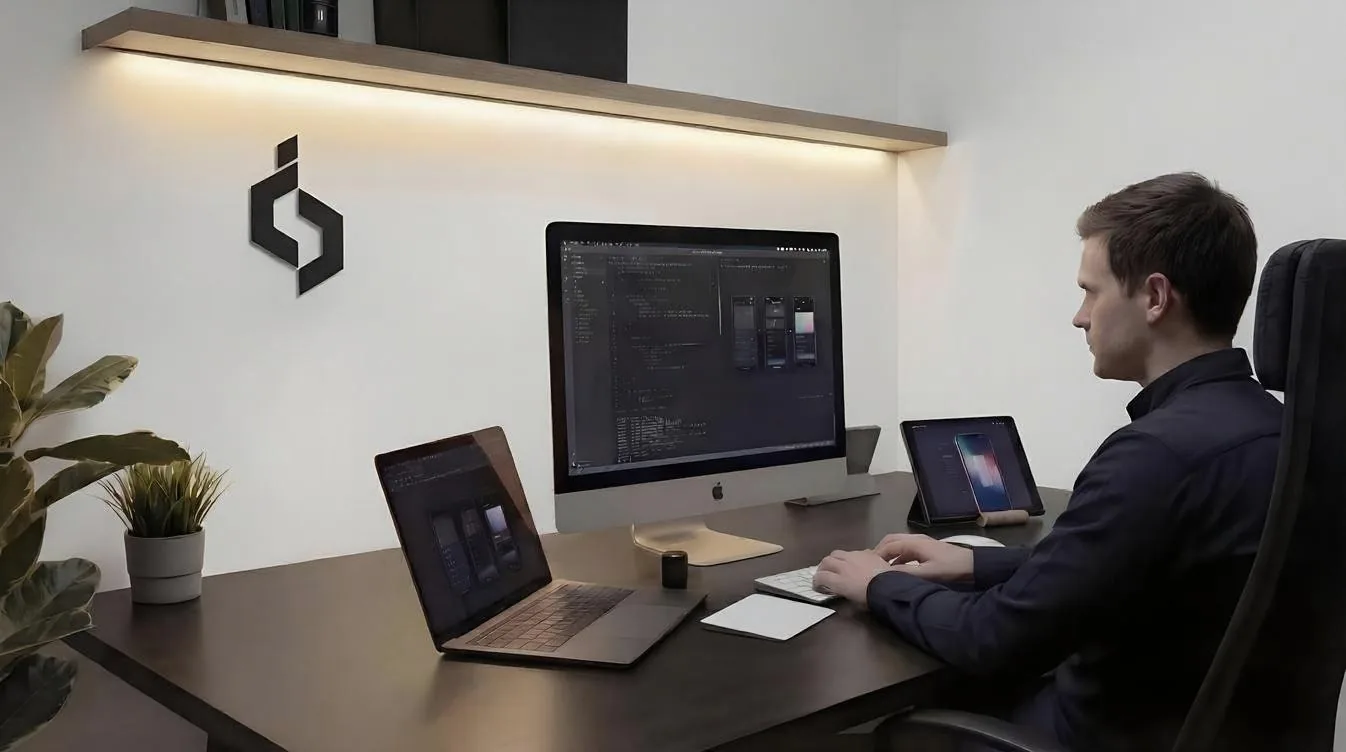
App Development for B2B Companies
From product strategy to build and launch clean architecture, strong UX, and delivery you can scale.
Clear scope, structured delivery, and a maintainable product foundation.
What you gain
An app is not just a build—it’s a business capability. Done right, it reduces operational friction, improves customer experience, and creates a scalable platform your team can evolve.
Client benefits (practical)
- Faster workflows and fewer manual steps for teams and users
- Better adoption through clear UX and product thinking
- Reduced delivery risk with a scoped, milestone-based process
- Maintainable codebase with documented handover
- A launch-ready product with a roadmap for iteration
Who it’s for
- B2B companies digitizing internal processes or customer journeys
- Teams needing a reliable MVP to validate workflows and adoption
- Businesses scaling an existing product and requiring clean foundations
What we build (application types)
- Internal business apps (operations, dashboards, workflows)
- Customer portals (account access, requests, onboarding)
- Mobile apps (when mobility adds real value)
- MVP products for validation and iteration
- Integrations and automation layers (connecting existing tools)
Deliverables (what you receive)
Strategy & product foundations
- Discovery workshops (users, workflows, constraints, success criteria)
- Requirements and scope document (features, priorities, assumptions)
- User journeys + wireframes (core flows)
- Technical architecture outline (stack, data flows, integrations)
Design & UX
- UI design for key screens
- Component system (consistent UI patterns)
- UX writing / microcopy (labels, errors, onboarding messages)
Build & delivery
- App development (front-end + back-end as needed)
- API integrations (existing systems, third-party services)
- Authentication and roles (access control)
- QA plan + test cycles (functional + critical paths)
- Deployment setup (environments, release process)
Handover
- Documentation (setup, deployment, key components)
- Admin and user guides (as needed)
- Support and iteration plan post-launch
You receive an app built to be maintained and improved—not a one-off build that becomes a constraint.
Our approach (built for reliable delivery)
We reduce risk by validating what matters early: workflows, priorities, and decision paths. We deliver in milestones with working increments, so you can review progress and steer direction—without late-stage surprises.
5-step process (with client approvals)
1) Discovery & scoping
- Goal: clarify users, workflows, constraints, and success criteria
- Deliverables: scope document + priorities + milestone plan
- Client approval: scope and timeline validated
2) UX & architecture
- Goal: design flows that users will actually adopt
- Deliverables: user journeys + wireframes + architecture outline
- Client approval: flows and architecture validated
3) UI design & specification
- Goal: create a clear, consistent UI system
- Deliverables: UI screens + components + functional specs
- Client approval: UI and specs validated
4) Development & QA
- Goal: build a stable, maintainable application
- Deliverables: working increments, QA cycles, bug fixes, release notes
- Client approval: milestone demos and acceptance checks
5) Launch & iteration
- Goal: deploy safely and improve based on real usage
- Deliverables: launch checklist, monitoring basics, iteration backlog
- Client approval: go-live and post-launch priorities confirmed
Quality standards (proof without numbers)
- Structured scope and milestone plan to prevent drift
- Maintainable architecture and reusable components
- QA focused on critical paths and real user flows
- Documentation and handover for autonomy
- Security and access control considered by default (roles, auth, basic hardening)
If your app needs to be reliable, scalable, and adopted - start with a scoped plan.
Q&A
Q
Can you build an MVP first instead of the full product?
Q
How do you prevent scope creep?
Q
Will we be dependent on you after launch?
Q
Will we be dependent on you after launch?
Q
What do you need from us to start?
.svg)